
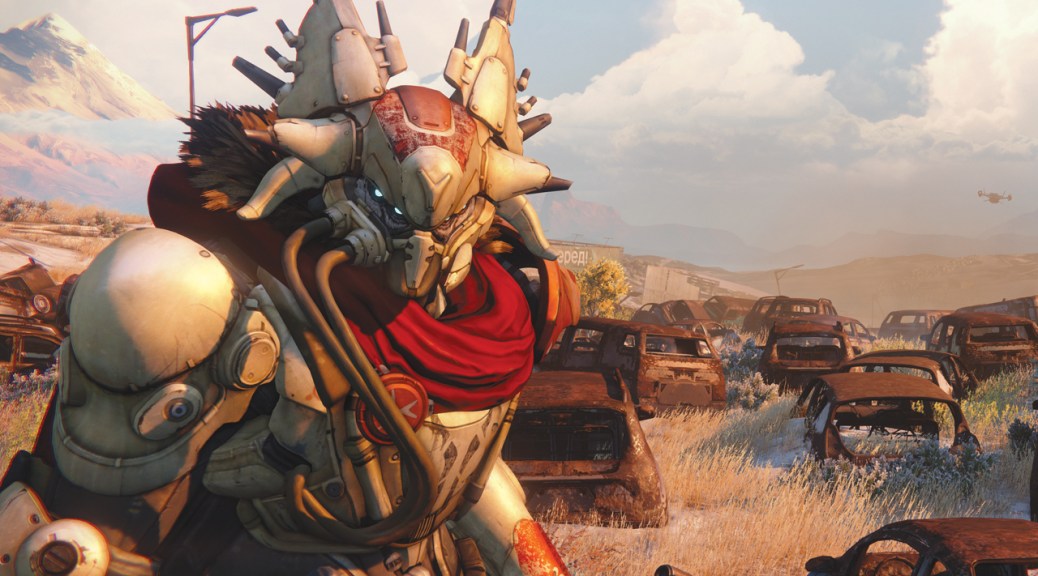
Platforms: Playstation 3/4 & Xbox 360/One
Developer: Bungie Publisher: Activision
Players: 1, 1-6 Online Release Date: September 9, 2014
Shoot first, ask questions never.
Destiny seemed like a sure bet, an esteemed developer with a ton of money behind it doing what they do best but on a grander scale than ever before. What could go wrong? It turns out a lot could. The story is barely there, its mission structure is repetitive, the RPG elements are too light and its online innovations often hinder the experience just as much as they enhance it. But despite all of this the core gameplay still wins out with Bungie’s gunplay at its most satisfying against the lavishly painted galactic backdrop. Destiny unfortunately, now at the beginning of its ’10 year’ life, is not all it could have been. However it is a top class shooter set within one of the most beautiful galaxies ever crafted, hardly the worst starting place for a franchise that’s set to see numerous expansions in the coming years.
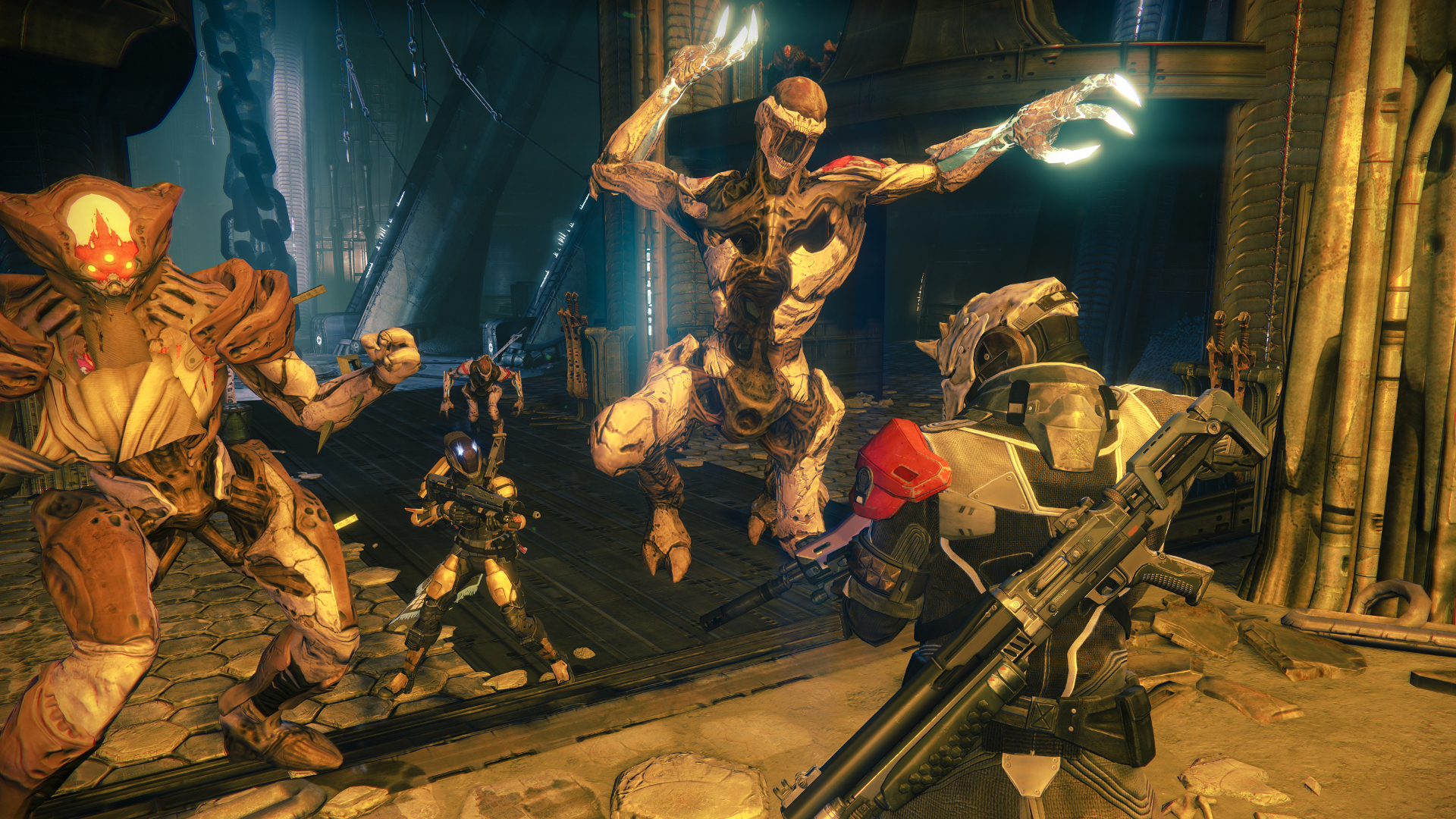
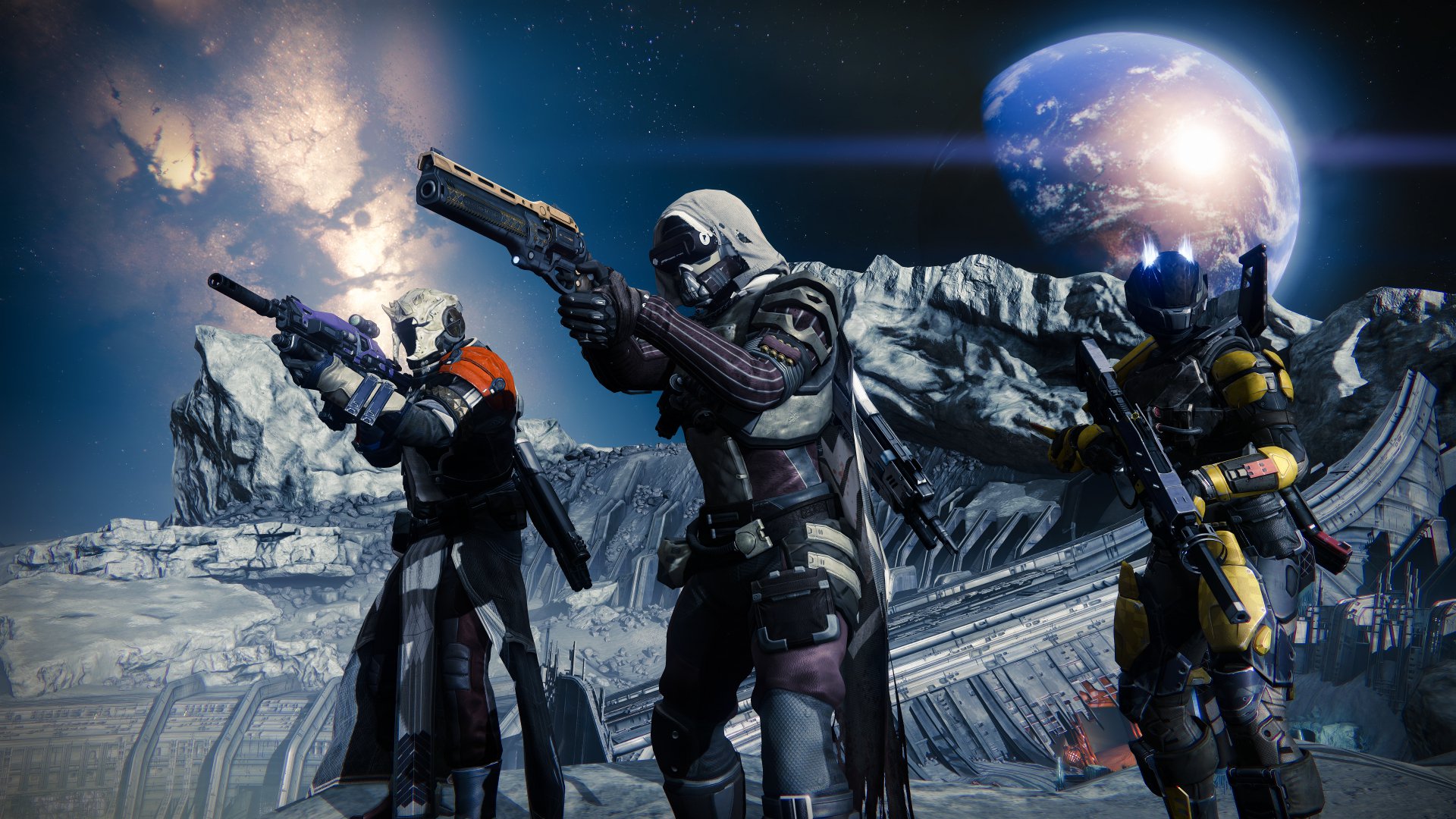
Its perhaps best to start with what’s best about Destiny. The shooting is top notch, each action you take is responsive and has a visible impact on the enemy. Whether you’re peppering a towering Cabal from afar or introducing a Fallen dreg to your fist, the enemy will feel every hit, visibly reacting to attacks wherever they may land. On top of this each class has its own specific skills that add an extra layer of individuality to proceedings. A Hunter may double jump with blinding speed to avoid enemy fire where a Titan could instead opt to toss a stun grenade to blind his foes instead. Furthermore supers allow each class to throw down some instant devastation in tight situations. These options along with their their equal reactions are endlessly satisfying and ensure that the flow of combat never leans too heavily on statistics alone.
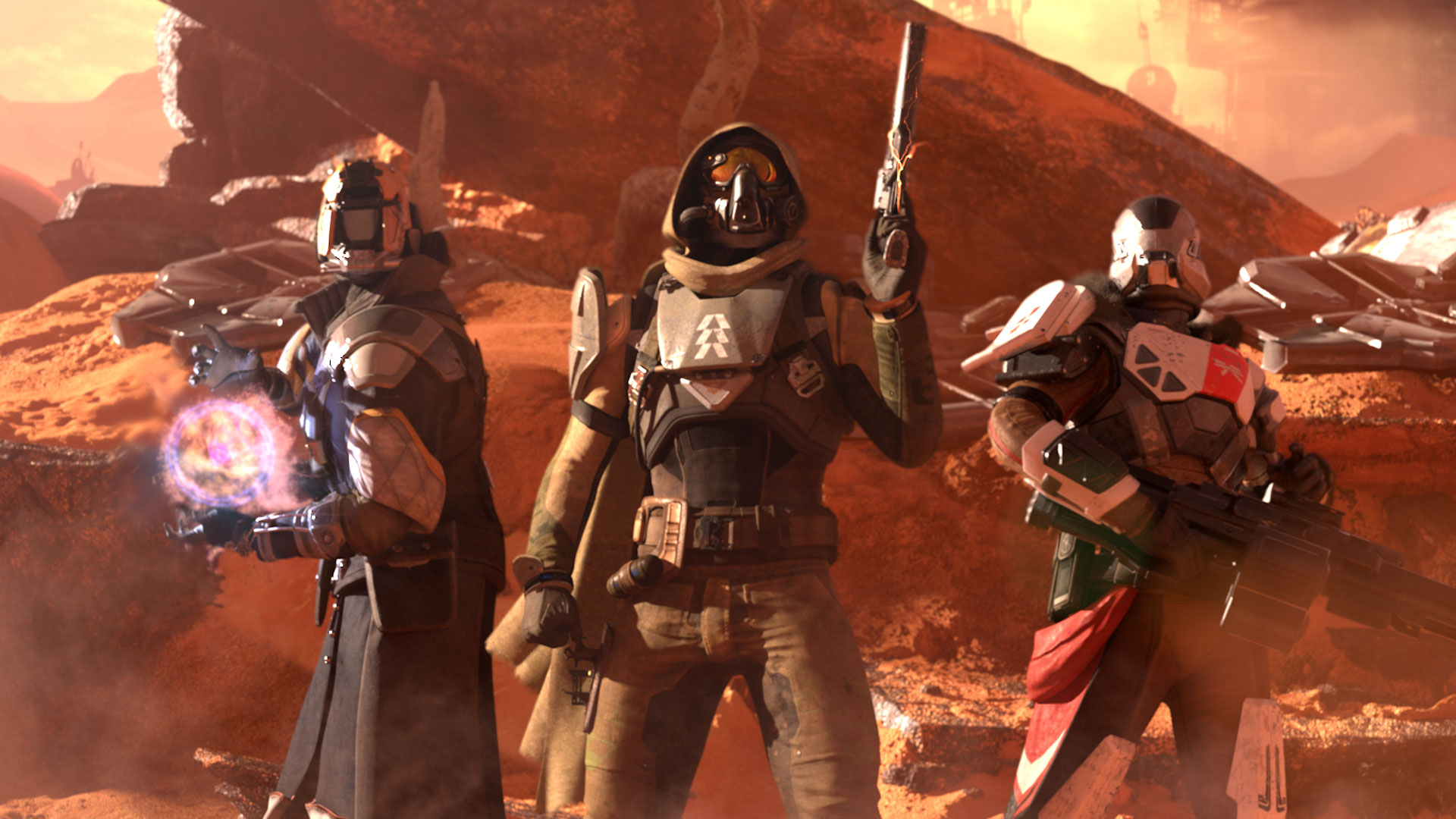
The impressive shooting can however mask the Destiny’s shortcomings in the RPG department. Its skill trees are narrow to say the least, rarely giving you any input in your characters development besides selecting skills as they’re made available one by one. Subclasses are unlocked at level 15 and do offer satisfying variations on the characters skill sets, but considering the level cap stands at 20 and the fact that you’ll be done with much of the games content by this point its arguably offering too little too late. The skills themselves each play a useful role in gunfights but often only offer different ways of achieving the same things. For instance across the 18 different grenade types available to all the classes, only a handful stand out as being anything but a different means of dealing the same damage. As a result skills are either too similar or used too infrequently to meaningfully change the way you play, which brings us to the similarly troubled weapon selection.
Each gun you’ll use is a delight to wield and can be upgraded in useful ways (albeit with a similar lack of options) but with only 9 base weapon types the room for variation is once more limited. Admittedly each weapon type can come in a multitude of varieties, but the differences between them are so subtle that you’ll rarely feel a tangible difference between one shotgun and another besides the obvious like magazine size. The selection of vehicles available, though all fun to use, is also slim which further narrows the possibilities in combat. Couple these with your limited skill set and you’ll soon find yourself disappointed whenever another guardian of the same class as you joins your team as you’ll find yourselves fulfilling the same role via the same methods. Ultimately as a first person shooter Destiny is a resounding success in terms of mechanics, but the sheer lack of options available means that your guardian won’t play awfully differently whether he’s level 5 or 20, which is disappointing for an RPG no matter which way you cut it.
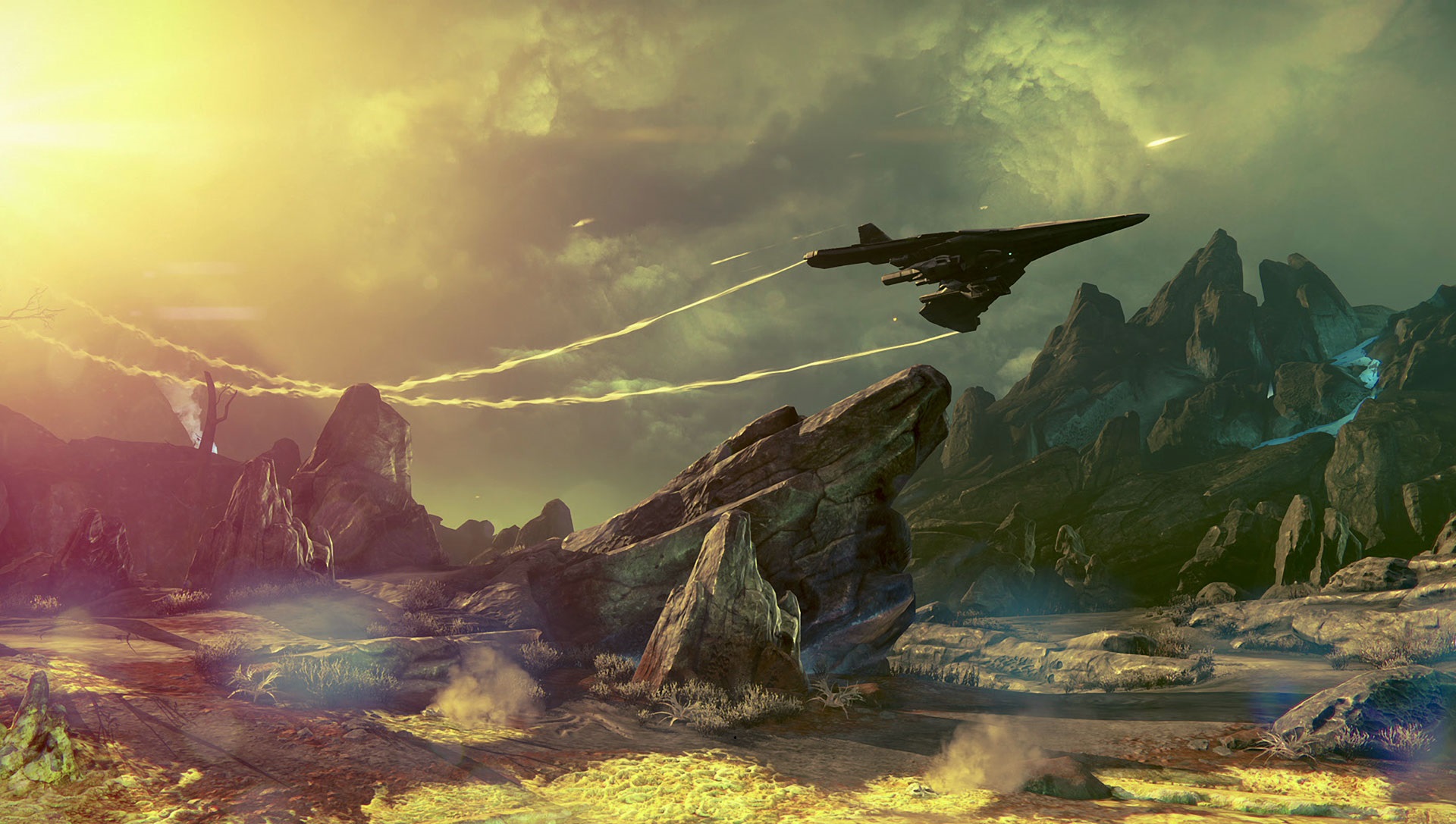
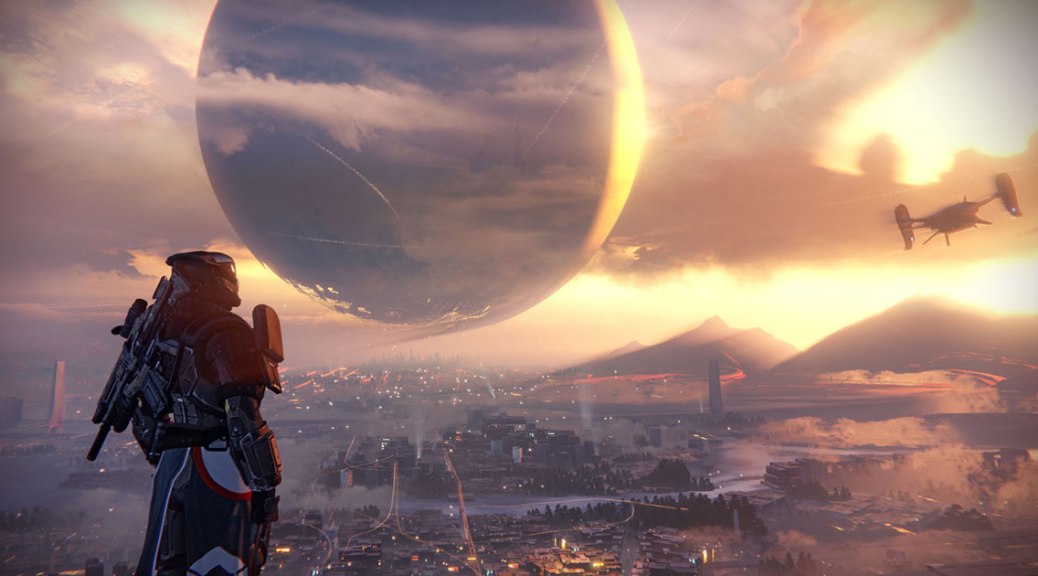
It may come up short when applying RPG elements to its gameplay, however Destiny does succeed in designing a world (or worlds) within which the grandest of RPG’s could take place. Even though each is wildly different in appearance they’re all a pleasure to look at and combine actual playable areas with impressive artistic backdrops flawlessly. Terrain also plays its part in differentiating the four playable worlds, with Earth’s larger debris filled planes contrasting well with the likes of Venus’ more vertically orientated ruin filled canyons. There is an underlying problem however in that Destiny offers little reason for you to explore these planets besides the odd treasure chest and collectibles; furthermore few of the areas feel truly alive as there’s little sign of any of the locales having actually been lived in despite every area being rife with enemy forces. Its difficult however to truly criticise Destiny on this point as the areas serve their purpose as a backdrop for its action perfectly, its just that the open world nature of the game feels unneeded much of the time. Perhaps if there was more freedom in regards to how we explored and went about pursuing objectives within these areas the open world approach would be warranted, but once Destiny has dropped you off at the same starting point for the fifth time to travel to some other corner of the map its reuse of areas becomes repetitive rather than exploratory no matter how nice they look.
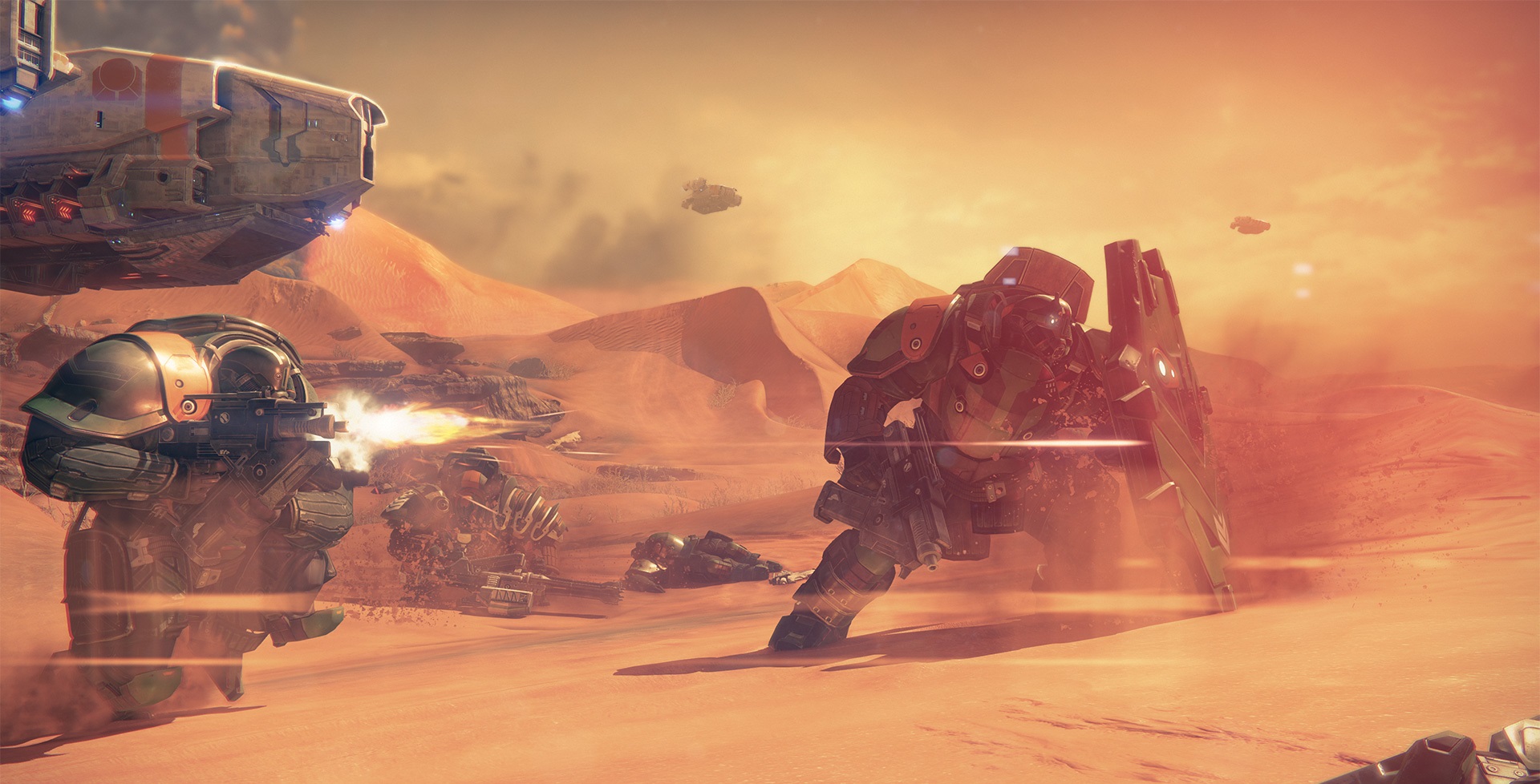
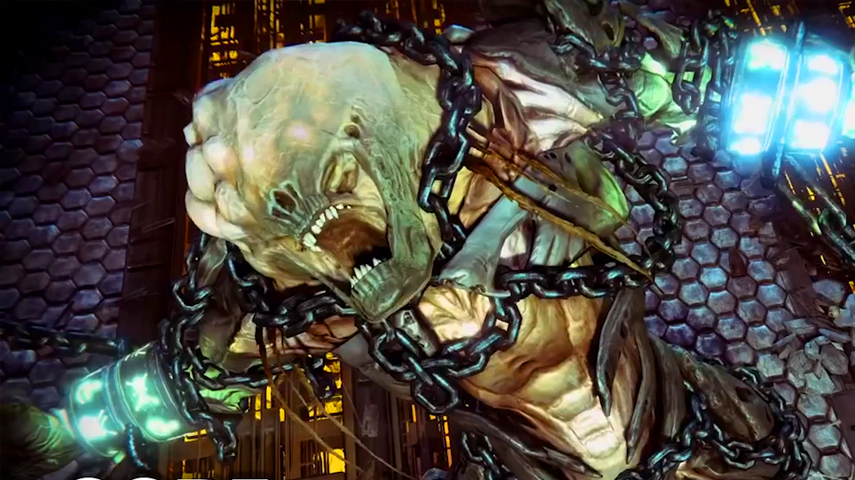
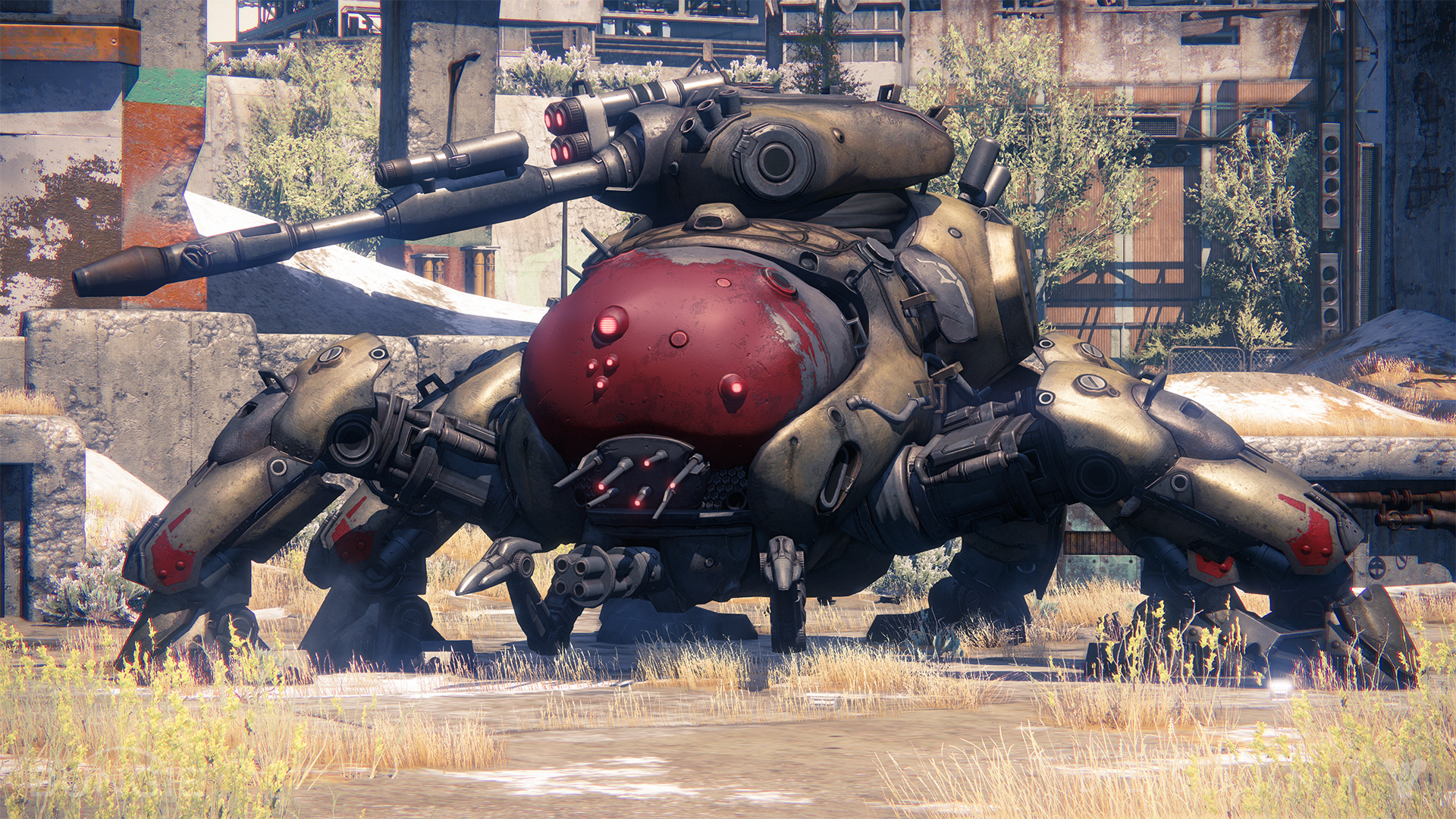
Across these four worlds you’ll be shooting four different enemy races, each of which is a joy to encounter. Each faction behaves differently in combat and have interesting hierarchies that shift your priorities in battle. Fallen vandals may cloak and rush you forcing you out of your comfort zone if you’re sniping whereas shield wielding Cabal can create an impassable wall that can make a shotgun assault difficult to achieve. Few of the enemies skill sets are truly original but all are combined well to create factions that act very much as coherent units that are unique when sized up against each other. Bosses however, while generally enjoyable and challenging, are almost always super powered versions of normal enemies that you’ve fought numerous times before. Furthermore almost every boss boasts an aggravating ground pound attack that discourages getting up close; bosses that force you to change tactics are always appreciated but to have every boss exercise the same counter measure can grow tiring.
A mere glimpse at each race also gives the player an idea of their history, with the excellent art direction doing wonders for fleshing out these otherwise underdeveloped antagonists. The Cabal are a particular highlight, their imposing outline, brute force tactics and superb theme providing a fantastic challenge in the games final act. Martin O’Donnell’s soundtrack in fact contributes as much to the creation of the galaxy as the visuals do, its uplifting tracks throwing a more fantastical twist on the post apocalyptic sci-fi scene. From the oppressing tones that accompany the Vex to the Cabal’s imperialistic beats, this is some of O’Donnell’s best work to date.
Its a shame then, that given Destiny’s impressive galaxy, that every aspect of its story is lacklustre. Its central campaign barely attempts to give us a compelling reason to be rushing to our next objectives, our guiding ghost telling us to kill certain targets for no discernible reason at all. It does pick up in the second half of the campaign as the cast of characters, enemies and vistas are all expanded in different ways; but proceedings soon degrade back into vagueness before ending prematurely. Games don’t necessarily need brilliant stories to drive them if the core gameplay is strong enough, but Destiny makes out as if it is telling a grand tale whilst throwing out terms you’ll never learn the meaning of. The two driving forces of its galaxy, the heroic ‘Traveler’ and its opposite ‘Darkness’ are constantly referred to but are never explained in the least, not even to the extent where they could be enticing mysteries. You’ll be gunning down four races with little reason as to why you must, and its never clear whether they’re acting on behalf of the Darkness as they’re clearly not acting as one. The Cabal wage war against the Vex on Mars, but rather than even entertain the idea of an alliance (or explaining why one wouldn’t be possible) with one to defeat the other you’re simply instructed once more to kill everything that moves.
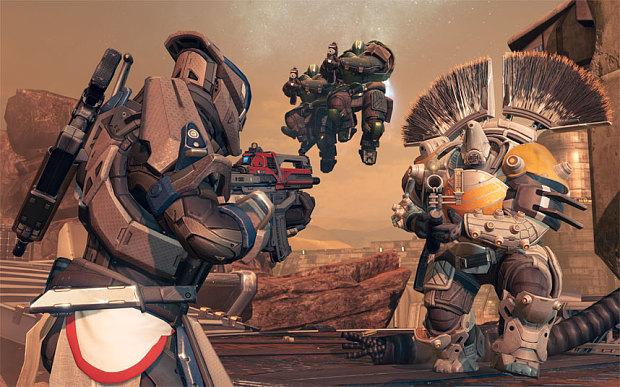
There’s been much criticism of the voice acting here, particularly in the case of Peter Dinklage’s Ghost, but its perhaps the writing that’s to blame as a performance can only be so good when you’ve clearly no idea what you’re talking about. The Queen of the Reef stops you from attacking her Fallen bodyguards (a usual victim of your guns) declaring that “It does understand these ones are mine” – we’ll never learn why, and its hard to shake the feeling that Destiny often doesn’t know why either. Grimoire cards can be unlocked (oddly these aren’t visible within the actual game) to flesh out the lore of the universe, but they generally fail to shed any light on any of the more important questions raised throughout Destiny’s campaign. No matter how epic the galaxy may be made out to be, you’ll only need to ask the question ‘why?’ after every sentence uttered and the illusion of depth soon falls apart. The reluctance to form any reason to press on in the campaign does unfortunately bleed into gameplay which often falls back on escorting your ghost companion from A to B and then defending him in wave based battles. Luckily the steady stream of new enemies and planets keeps this structure from ever becoming too much of a problem, but when you encounter a more memorable mission such as ‘Scourge of Winter’ it makes you wish the rest of the campaign could have that much energy behind it all the time.
There’s plenty to do outside of the campaign however. Patrol mode allows you to freely explore each of the four planets in pursuit of randomly generated missions, but the repetitive objectives and aforementioned lack of motivation for exploration will likely make this the mission mode you’ll spend the least time in by far. The Crucible is Destiny’s answer to competitive multiplayer, pitting guardians against each other on a surprisingly level playing field. The objective based modes place just as much emphasis on defending as they do killing which ensures any build of guardian can find an important place in their team, and playing long enough will make you appreciate your skills just as much as other classes.
Strikes challenge your fireteam of three to battle through some truly tough encounters that always end with great boss fights that demand team coordination. While they don’t escape the routine wave based scenarios, they do provide some of the best of what Destiny has to offer as the game is at its best when your overcoming the odds with friends. The boss battles, though still disappointingly just powered up versions of certain enemies, are far better than any you’ll encounter in the campaign due to some smart arena design. The bosses themselves still do little to change things up, but steady streams of reinforcements that force you to move and tightly designed arenas with plenty of cover make these lengthy encounters exciting where they could have easily become grating wars of attrition. *I’ll be updating this review once I’ve fully completed the Raid mission.
It is true that Destiny is best when played with friends, but when it comes to doing anything but enabling people to play together its online features seem half finished. Matchmaking facilities set up games quickly and generally hold steady throughout your session, but weaker internet connections can really suffer when Destiny forces players into another ones world. Slow down rarely occurs but you can expect to be booted when numerous players join to complete a public event, and the fact that Destiny will opt to break your existing team apart to allow you to play with strangers seems backwards. The Tower is always loaded with other players despite there being no reason for it to be; you’ll have limited means of communication and no facilities to organise groups within this hub but you’ll still have to wait for its lengthy loading times every time you pay it a visit as a result. Its important to emphasise that these features will only be problematic for some players and that communicating with other players can be fun despite it having little substance, but its hard to shake the feeling that Destiny does little to innovate with its much touted and sometimes invasive online components.
Likewise the loot and customisation system seems to be content in doing enough and no more. You’ll be treated to a slow trickle of loot throughout the game that rarely excites no matter how powerful it is. Rarely did I find myself having to decide between two pieces of equipment as one was always better than the other, and I couldn’t even make use of good weapons I didn’t use since trading between players isn’t possible. Vehicles and ships come off even worse, with your personal Sparrow vehicles boasting few noticeable upgrades and ships amounting to nothing but customisable loading screens. Character customisation even feels unneeded, with its small selection of faces and hairstyles doing little to inspire creativity.
Destiny’s endgame just disappoints further beginning with its reward of a single mote of light, an item you’ll need plenty more of before you can purchase anything of worth. Its a sign of things to come, as all your activities post campaign will involve replaying missions several times with hopes of unlocking rare level cap enhancing equipment. It turns what should have been Destiny’s main appeal over other shooters into an exercise in repetition which will either hook players in or turn them off completely. There’s a solid 20 hours of fun to be had without the need to replay any content already, but Destiny squeezes this content for all its worth in the worst possible way. Some element of randomness could have helped Destiny greatly here as even the best encounters can grow stale when you’ve run into them for the umpteenth time with no hint of change or meaningful reward.
Verdict
Taken for what it is, Destiny is an excellent shooter backed by solid new features that can be a blast with friends. But digging a little deeper into its features more often than not yields disappointment as it becomes apparent that Bungie is content with doing enough and no more. It offers a good roster of game modes in one cohesive package that all entertain, but its difficult to commend its gameplay for having overcome any rocky waters given that the boat is never pushed out in the first place. Destiny is very much a mediocre story told by a brilliant story teller, you’ll be drawn in by the wonderful galaxy and satisfying gameplay but its average features prevent it from ever fulfilling its potential. It may not be a perfect start, but if it can learn from these initial shortcomings Destiny could very well be destined for greatness down the line.
Hits
+Excellent core shooting experience
+Beautiful galaxy full of jaw dropping vistas
+Engaging and challenging enemy factions
+Strikes offer some of the best co-op action this year
Misses
-RPG elements are too shallow across the board
–Non-existent story lets down the galaxy and its inhabitants
–Limited array of weapons and vehicles
–Offers little reason to explore its open areas
–Underdeveloped online components
Overall Rating






 CRITICAL HIT REVIEWS